Mild steel, stainless or aluminium? 2 mm or 3 mm? A practical guide to choosing material and thickness for parts that are cut, bent and finished.
Material and thickness drive almost everything about a sheet metal part: its strength, weight, cost, how it bends and how it is finished. Getting these right early saves redesigns later. Below is a practical starting point. Every application is different, so treat these as rules of thumb and talk to us about your specific part.
Common materials and where they fit
- Mild steel (MS): strong, economical and easy to weld and bend. It rusts if left bare, so it is usually powder coated. It is the default for brackets, frames, enclosures and structural parts.
- Stainless steel (SS): corrosion resistant and good-looking without coating. It suits food-contact, outdoor, washdown and visible parts. It costs more than MS and springs back more when bent.
- Aluminium: about one-third the weight of steel, naturally corrosion resistant and easy to form. It suits covers, housings and lightweight panels. Softer alloys bend easily, while harder tempers may crack on tight bends.
- Brass and copper: used for decorative inlays, nameplates, electrical parts and accents. They are usually thinner gauges.
Our laser cutting capacity
| Material | Maximum thickness |
|---|---|
| Mild Steel | 16 mm |
| Stainless Steel | 12 mm |
| Aluminium | 8 mm |
| Brass | 4 mm |
| Copper | 4 mm |
These are the maximums our machines will cut. Edge quality and cost are usually best well inside these limits. If a part only needs 3 mm, specifying 5 mm adds weight and cost without adding much.
Picking a thickness
- Thin sheet, around 0.8–2 mm: covers, enclosure skins, trays and decorative panels. Bends and flanges add the stiffness.
- Medium, around 2–5 mm: brackets, mounting plates, guards and frames that carry moderate loads.
- Heavy, above 5 mm: base plates, gussets and structural parts. Check whether bending is needed, because the force required rises steeply with thickness.
Often a thinner sheet with a well-placed bend or return flange is stiffer and cheaper than a thicker flat plate.
Designing for bending
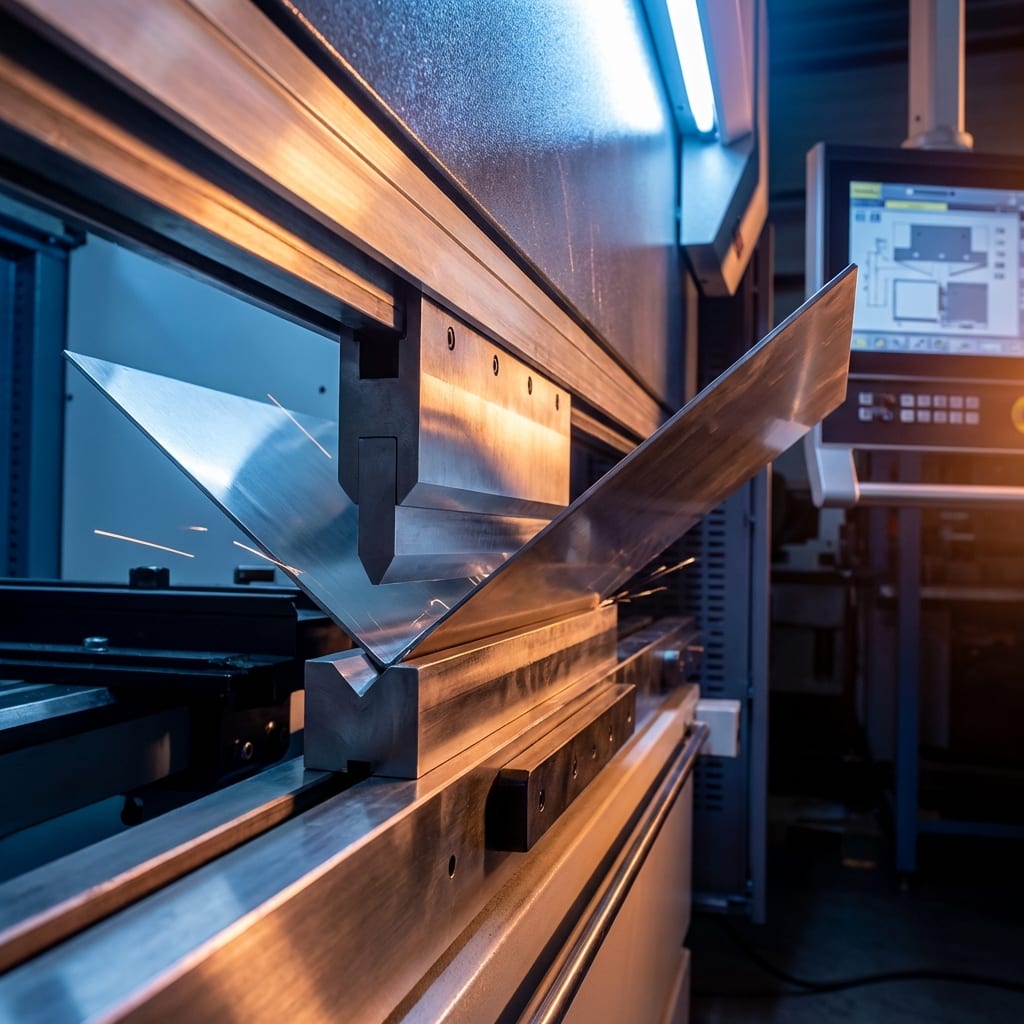
Our CNC press brake is rated at 175 Ton over a 3 m length and handles sheet from 1 to 12 mm. A few rules of thumb help a part bend cleanly:
- Inside bend radius: an inside radius close to the sheet thickness is a sensible default for MS. Harder materials and thicker plate need larger radii.
- Minimum flange length: very short flanges cannot sit across the bending die. Keep flanges to at least three to four times the thickness, and ask us for exact figures on thick material.
- Holes near bends: keep holes and slots at least about 2–3 times the thickness plus the bend radius away from the bend line, or they will stretch out of shape.
- Bend relief: where a bend meets an edge or another bend, add a small relief cut to prevent tearing.
- Consistency: use the same inside radius throughout a part wherever possible. Fewer tool changes means faster, more consistent bending.
Laser cutting or turret punching?
For parts with many identical holes, louvres or perforations, CNC turret punching is often quicker. Our Amada machines punch up to 5 mm (32 Ton) and 3 mm (16 Ton). Laser cutting suits complex profiles, small batches and thicker plate. Many parts use both, and we will suggest the most economical route.
Think about the finish early
If an MS part will be powder coated, avoid sealed pockets that can trap pre-treatment chemicals. Provide a hole or tab for hanging, and tell us which surfaces or threads need masking. Stainless and aluminium parts may need no coating at all, which can offset their higher material cost.
Not sure what to specify? Send us the application and approximate size on WhatsApp. We will suggest a material and thickness that balance strength, cost and finish.
All guides